skip to main |
skip to sidebar
And it's not the thing you do, dear,
It's the thing you leave undone,
Which gives you a bit of heartache
At the setting of the sun.
~Margaret E. Sangster
The Sin of Omission
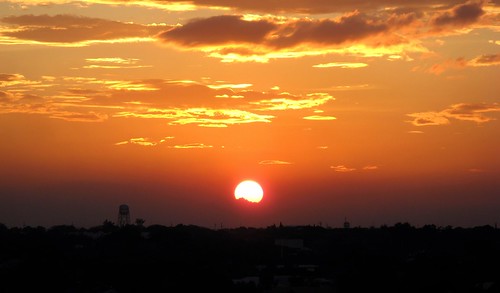
Camera: Canon PowerShot A710 IS
Exposure: 0.003 sec (1/320)
Aperture: f/4.8
Focal Length: 34.8 mm
Date & Time: March 17, 2008 7.03pm (GMT+8)
Location: Alabang, Philippines
Modifications: Noise reduction, cropping
My interest in photography started more than 10 years ago. I always had my little film camera with me wherever I go but I only took photos of sunsets. Back then, I thought that I would never ever get to take good photos because photography could be a very expensive hobby and I had more important things to spend my money on. But look at me now.. I still don't spend anything in the name of photography hahaha! I haven't changed at all. I still take photos of sunsets once in a while though. I think sunset captures will never fail to fascinate most people. Moreover, it is very easy, I bet you can even do it with your eyes closed.
Anyone can take photos of sunsets. Hence, they may sometimes look too ordinary especially for more experienced photographers. However, there are several ways to jazz up sunset shots. I am not talking about over-processing the image. It's more of adding drama to the image through forced perspective. Last year, I saw a wedding photo of a bride 'kissing' the sun. I thought it was a clever idea. I've seen some sunset photos that are rather forgettable but the unique ones have always served as a reminder that sunset shots can be less boring. My friend Romy nicely applied forced perspective on this sunset pic, now compare it with my absolutely predictable shots, and you would understand what I am talking about.
I rarely take photos of sunsets here because tall trees obscure my view. But an idea struck me last Friday as I was arranging our plants in our kitchen. Since plants are within reach and the sunset is in sight, I thought I should combine them in an image. Here's my feeble attempt at spicing up a sunset moment:
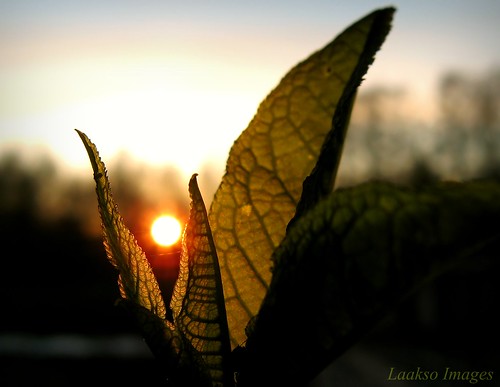
I was a bit reluctant to upload that shot to my photo stream, I thought that some may find it weird and ugly. Surprisingly, the super nice members of the Flickr community didn't find it as a lame attempt. Now I am aware that my sunset view isn't that bad and I can occasionally capture sunset moments indoors when I've got nothing else to take photos of. Good thing that I didn't let my doubts take control of me. As a result, I've got no heartaches secondary to things left undone.
Spring is nature's way of saying, "Let's party!"
~Robin Williams
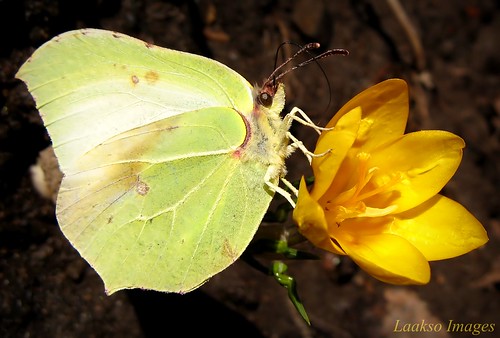
Camera: Canon PowerShot A710 IS
Exposure: 0.001 sec (1/1000)
Aperture: f/4.0
Focal Length: 5.8 mm
Modifications: Cropping, adjusted brightness and color levels
Date & time: 25 April 2009 at 14.29 EEST
Location: Kerimäki, Finland
Spring has sprung! I couldn't help but get ecstatic about it. Yeah, I took nature photos during the winter months, but I was in Asia from Mid-December 'til February. To me, winter is not the best time of the year to take photos, lack of light always makes my photos look dull. Moreover, I always get blurred photos because my hands get shaky, thanks to the extremely cold weather.
Good lighting is a major ingredient of stunning photographic compositions. It's wonderful to be in here in Finland during spring and summer because of the lovely natural light. When I was in the Philippines I had a chance to meet my fellow macro addicts for a photowalk:
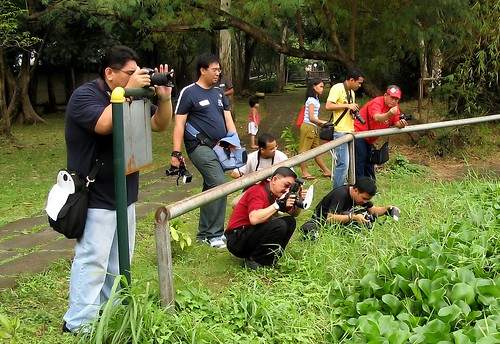
The weather wasn't perfect then, I had to use flash most of the time, as a result, 80% of the photos were quite dull. Although most of my shots sucked, I absolutely enjoyed shooting with the pros. I would definitely join them again on my next vacation. For the mean time, I'm back doing solo photowalks. I have a higher 'success rate' here in our own yard, thanks to the lovely spring sunshine. I took 20 photos a couple of days back, and most of them are good -according to my belief. Here are two new photos:
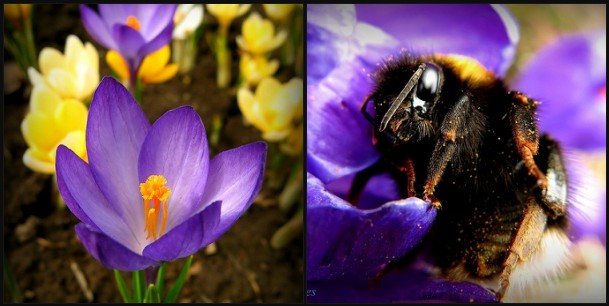
If you you want to give macrophotography a shot, keep in mind that it is about showing off the details. This can be achieved by taking photos when natural light is at its best. I still get emails from photographers who are curious about the brand or type of macro lens that I use, news flash: I don't have one yet. If Santa Claus will give me a DSLR plus the kind of macro lens that would best suit my usual subjects, of course I would accept it. I am not counting on it though because I can't be nice all year. My little camera is still okay, but it is no longer as efficient as it used to be. Its manual focus still works perfectly, which means that I can still make do with it.
I have always been focused on improving my so-called skills, setting goals have always been helpful. For this season, I will experiment on abstract macros and minimalism. Of course you would still see shots bearing my usual style. I hope that my photos in the weeks to come will be better than my 2008 spring collection. It's a tall order, but with the wonderful spring sunshine, I see better photos in the horizon. Do I sound ridiculously optimistic? Well.. blame it on spring :-)
“Excellence is in the details. Give attention to the details and excellence will come.”
~ Perry Paxton
Pardon my nearsightedness
Camera: Canon PowerShot A710 IS
Exposure: 0.005 sec (1/200)
Aperture: f/4.0
Focal Length: 5.8 mm
Modifications: Adjusted temperature & brightness level
Date & Time : February 7, 2009 at 13.40 Manila Time
Location: Parks & Wild Life, Quezon City, Philippines
Late last year, I had an opportunity to write for an upcoming stock photography site. I had to read about topics that I normally avoid: anything with numbers. The numerical system is like a horrible nightmare, I have spent most of my life eliminating it from my path. Whenever I read about photography, I tend to skip the topics that seem too difficult to understand. However, as I was working on that photography project I had to understand rules of composition where numbers play an important role. It was a good learning experience and I am glad that I had a chance to see numbers and formula in a different light.
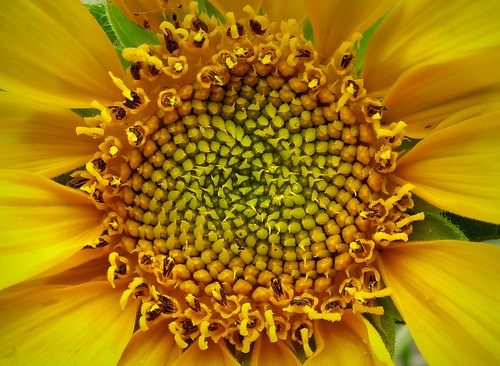
It has been found that the things that we find visually appealing bear the numbers in the Fibonacci series: 0, 1, 1, 2, 3, 5, 8, 13, 21, 34, 55, 89, 144, 233, 377, 610.. The number of petals of most flowers are Fibonacci numbers. Take a closer look at sunflower photo above, it has two sets of spirals, one runs clockwise and the other set runs anticlockwise. The number of spirals are always two consecutive numbers in the Fibonacci series- don't you find that fascinating? There are still many pieces of evidence that link the presence of Fibonacci numbers in nature.
The ratio of each successive pair of numbers in the Fibonacci series is about 1:1.618. What's the significance of that ratio? It is close to 1:1.618034 otherwise known as divine proportion, golden section or golden ratio. Many stunning structures from ancient to modern buildings were built based on the golden ratio. The golden ratio exists in famous art pieces of great artists like Leonardo da Vinci, Michaelangelo and Rembrandt. The use of golden ratio is not exclusive to those big names in the field of art. A regular person like me, for example, can always try to apply it to photographic compositions. After all, if a certain formula can increase the probability to capture viewers' attention, then making use of it shouldn't be a bad idea.
Remember the rule of thirds? It is actually a simplified version of the golden mean. In the rule of thirds, you divide the image into 9 equal parts. But if you want to apply the golden mean to your photos, the image should be divided with 2 vertical and 2 horizontal lines into 9 unequal but symmetrical parts.
Golden ratio: 1:1.618034
a:(b+c),b:a, (a+b): height
d:(e+f),e:d, (d+e):width

Placing the highlight of the image along these lines, especially on the intersections or power points would make the photo more appealing.
The golden spiral is another application of the divine proportion. This is done by making rectangles of increasing sizes by using the golden ratio 1:1.618.
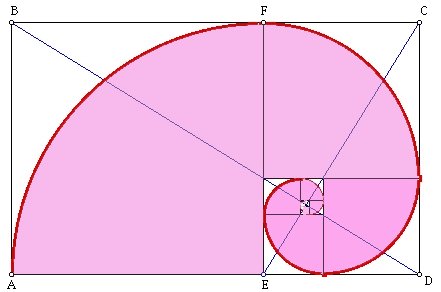
If we will use this on staircase photos and shells like the the pros, may be our shots will look as appealing. The golden spiral can also be used for landscape photos. This shape is found everywhere in nature: the nautilus shell, ram's horns, sunflower heads, fingerprints, DNA and the shape of the Milky Way.
The subject or the interesting part of the image should be in the smallest rectangle. While it should be easy to apply the golden spiral to close up photos, I thought it would also be nice to show you a landscape shot. I don't have a decent one so I had to look for a good sample photo from a web gallery of a pro.
Take a look at the photo below and notice how the rainbow is perfectly positioned in the tiniest rectangle.
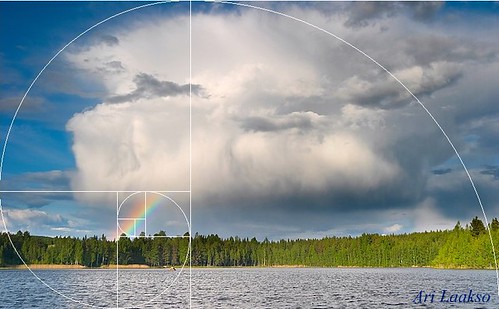
I find this photo very impressive not just because it was taken by my husband. Would you believe that he didn't even bother thinking about complicated-sounding golden spiral, and yet the highlight of the shot landed on the right spot? How could that be possible? I some people have the innate skill to do everything right. I am not among those fortunate ones, so I guess practice is my only option. I believe that if one would always apply the rules of composition to his or her work, chances are, it will be in their system like an incurable disease.
If you think the golden ratio is too complicated and not fun at all, then by all means, don't bother stressing yourself. Photography shouldn't trigger anxiety. I've got some good news though: you can always make photography simple and fun. Get a camera that has Rule of Thirds grids on the LCD. You can also use this online composition adjuster. All you have to do is load an image from your computer or a URL, and voila, you would get to check if your photos abide by the 'rules'. Just keep on practicing until you get the hang of it, then you're on your road to better photography skills.
“Light thinks it travels faster than anything but it is wrong. No matter how fast light travels, it finds the darkness has always got there first, and is waiting for it.”
~Terry Pratchet
Camera: Canon PowerShot A710 IS
Exposure: 2 sec (2)
Aperture: f/8
Focal Length: 13.2 mm
Modifications: adjusted contrast level, cropping
Date & time: December 27, 2008 10;05PM
Location: Santa Rosa Laguna, Philippines
I have mentioned that I prefer taking photos on a nice weather because I want to make use of natural light. In close up photos, flash can highlight minute details, that is, if it's not too bright. Using flash while shooting subjects that have light colors like pale yellow or those that have shades of white may give you disastrous images as results. The photo below was taken in a butterfly sanctuary in Finland:
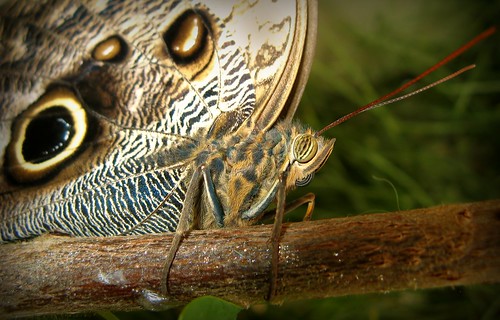
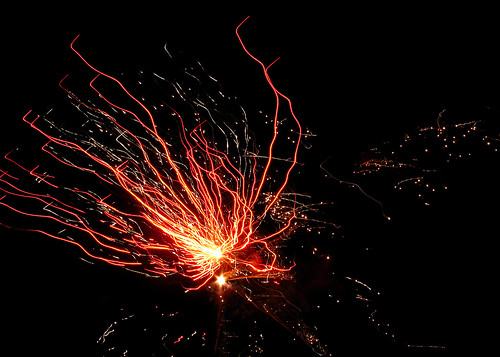
The subject was in the shade, had I disabled the flash, we wouldn't get to appreciate the interesting pattern in its eyes. Most of the photos in my photostream are close up shots of bugs and flowers, however, 90 percent of the photos were taken in natural light. Why? Because there are instances when flash ruined my shots, and I don't want to make the same mistakes. I rarely go out on a gloomy weather when it's too dark for me to take pictures. Yes, I am afraid of the dark. I also didn't want to waste time on shooting scenes that my camera may not handle. But I discovered recently that taking long exposure shots with my camera is not as difficult as I thought. I even managed to take fireworks photos without a tripod, and surprisingly, some turned out very good
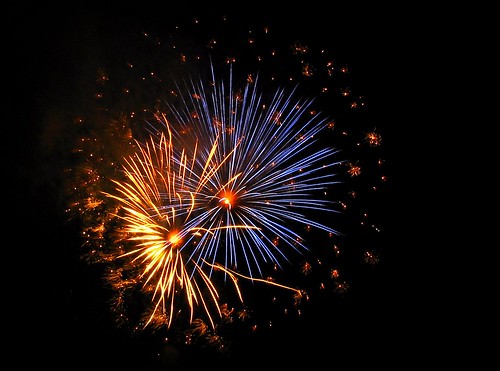
Good results always motivate me. Right now, I am considering going beyond nature close-ups and perfect lighting conditions, but that does not mean that I will get a new camera. I am a super newbie in the night shots department, my lack of knowledge in long exposure shots plus my ignorance of the features of my camera kept me in the dark for years. A new equipment can not guarantee that I would master long exposure shots immediately, it may ages for me to get used to different camera functions or settings. For now I think that I should concentrate on learning new techniques. The fireworks of new year's eve made me realize that I should not fear darkness as far as photography is concerned. My photography should not be a 9 to 5 thing because I can take photos even after sunset and they may turn out nice. I have always wanted to see the aurora borealis. I hope that when I finally get to witness that awesome phenomenon, I am already good enough to perfectly capture it with my compact camera.
"Sometimes less is more - less information, but highlighting it in a better way, sometimes better conveys important risk information.”
~Dr. Scott Gottlieb

Autumn love
Location: Kerimäki, Finland
Camera: Canon PowerShot A710 IS
Exposure: 0.005 sec (1/200)
Aperture: f/4
Focal Length: 5.8 mm
Don't get me wrong, I don't even like autumn, perhaps I never will. After all, why would I love it? It killed the bugs and flowers, and I am not exactly the forgiving type. Prior to the death of the greens though, they were bright autumn days and that was when I decided to give minimalism a try. Actually, I wasn't even sure whether I was going it the right way or not, but my previous visits to the photostream of one of my photography idols gave me ideas.
Leaves were the most available at the time because they were everywhere. I tried my very best to follow the rule of thirds. Additionally, I wanted dramatic contrast of colors that's why all of the shots had the blue sky in the background. It worked well, at least according to the reviews of my Flickr contacts. I used flash in some of the photos but it was on a low setting. Less detail means less amount of post-processing work to deal with, sometimes the image may not even require any modification at all. Ain't it easy?

Autumn colors
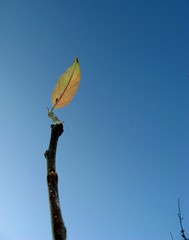
Alone but standing tall
The key is to make the subject interesting given the minimal information in the image. Applying simplicity as a technique will be very effective. If the subject is a flower, you wont need the distracting weeds in the background. Give the subject more room to breathe. The right choice of perspective can also make the shot stand out, no matter how tiny the subject may be. The viewers may only minimal detail, but creativity should always be at its maximum level because it will give the photo a spanking impact.
“Life is all about timing... the unreachable becomes reachable, the unavailable become available, the unattainable... attainable. Have the patience, wait it out It's all about timing.”
Stacey Charter
Camera: Canon PowerShot A710 IS
Exposure: 0.002 sec (1/640)
Aperture: f/4
Focal Length: 5.8 mm
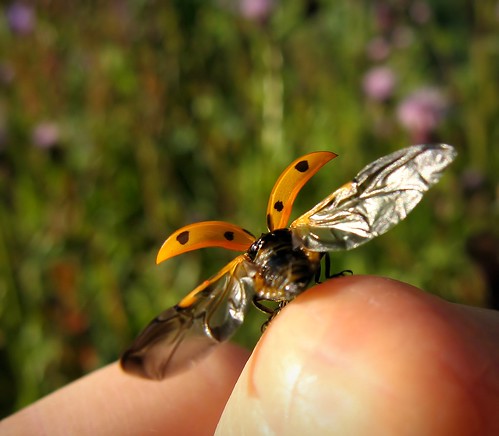
I mentioned in one of my previous entries that beginners should try to take photos of calm insects like beetles. Lady bugs are usually easy to take photos of, but it's important to capture it while doing something cool like attacking aphids or when it spread its wings. Needless to say, you have to watch its every move and be quick enough to capture them. If you don't have the patience, don't bother giving insect photography a try. Concentrate on still life photography instead.
I have some photos of lady bugs that look interesting simply because I was quick enough to press the shutter. Thanks to the adrenaline rush that I experience whenever I see cute insects. It makes me so alert, my heart beats faster than usual, I am just very focused on the bug and I wouldn't care about what is going on around me. Sounds like a case of love-at-first-sight? I think so too :-) What I find surprising is the fact that I never get shaky, which is great thing because until now I am still to experience how to use a tripod. Someday I will use one, that is when I already have Parkinson's disease.
Alright, so timing is important to make captures interesting, but how likely is it that something special is about to happen while closely monitoring the movements of the ladybug? If the ladybug is not comfortable with its surroundings of course it will fly away. It usually happens when it has no where else to go or based on my experience, when it's on human skin, it won't stay there for long so be prepared to press the shutter before its flight. When disturbed, the lady bug will release a yellow smelly substance from its joints so it's best to avoid touching it, unless you want a dirty bug as a subject.
Some say that they would love to take photos of ladybugs but they don't know where to find them. Lady bugs are usually on leaves of aphid-infested plants like roses. I also saw one ladybug crawling on a raspberry. These beetles are tiny, about 4-10 mm long but you will spot those spotted beauties because of their colors which stand out against greens. Knowing how the ladybugs look like during their early stages of life will also help you find them later on when they are already the photogenic insects that many people love. Here's a photo of ladybugs in their ugly phase:

I wanted to kick my self because I didn't get to witness the transformation of this lady bug:
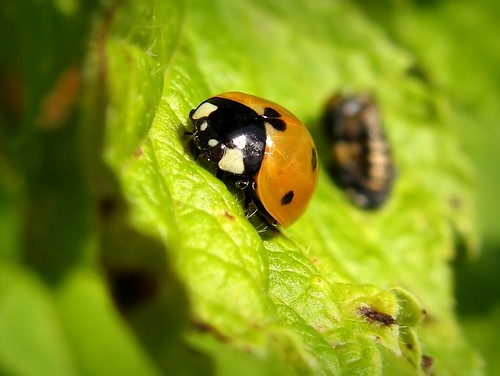
It would have been great to have photos of it as it come out of its larva shell.
A few days later, guess what happened? I arrived at the scene too late again! Just like those cops in some movies. But at least you can see the larva shell better in this photo:
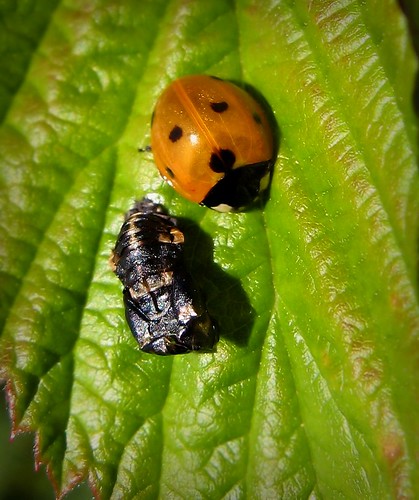
Next summer I will watch them like a hawk. But for now let me show that there were instances when I was on time:
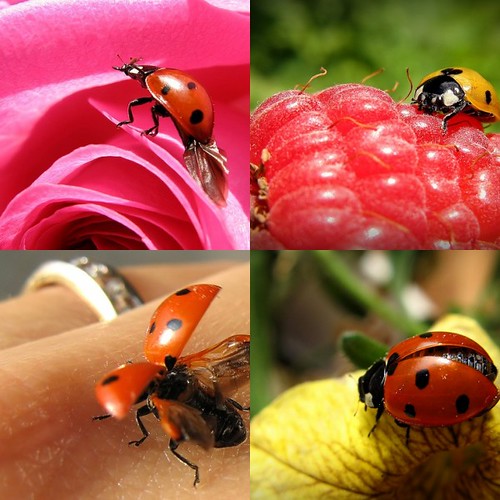
1. Ooops, dead-end!
2. Climb every berry
3. seconds before take-off
4. For Cara
Those shots are not perfect, but they are unique. I think they are good enough, considering the fact that those were produced by a 7.1 mp compact camera. Again these are proofs a small camera doesn't always produce images of poor quality. It's the lack of passion for the craft that makes photos look dull.
"Photography is still a very new medium and everything must be tried and dare... photography has no rules. It is not a sport. It is the result which counts, no matter how it is achieved"
~Bill Brandt
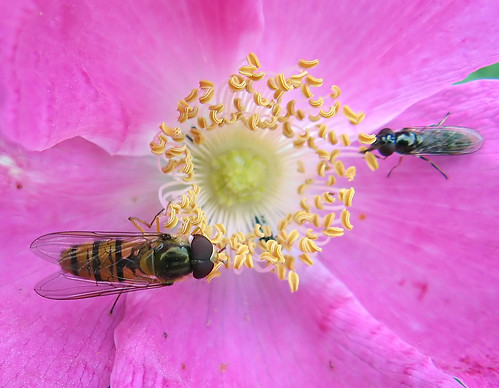
Pollen time
Camera: Canon PowerShot A710 IS
Exposure: 0.017 sec (1/60)
Aperture: f/3.2
Focal Length: 5.8 mm
Modifications: adjusted brightness & contrast levels, cropping, noise reduction
I started taking nature photos in the spring of 2007 using a Canon PowerShot A540. Back then, all I wanted was to have photos of ducks to upload to my Multiply page. Then I found out that the forum I frequent has a thread where members share their digital shots. I posted links to my photos and I am thankful because I got helpful tips from the regular posters of that thread. I realized that there is more to photography than pressing the shutter.
I am more famous in breaking rules than following them. So wasn't really happy when I read about the rules of photographic composition. I researched about the Rule of Thirds which sounded too complicated for me. Any sentence that mentions numbers will always be too difficult for me to understand. I was also a little hesitant to learn, because to me a hobby is supposed to be for fun, if there are rules then it would be a bit stressful. I got bored every time I read about basic stuff about photography until I realized that if I will not change my attitude towards learning new things, then I will never improve. My photos would probably be worse than photos taken by a 6-year-old. So I started to listen to criticism and I also followed my husband's advise and that was to think before pressing the shutter.
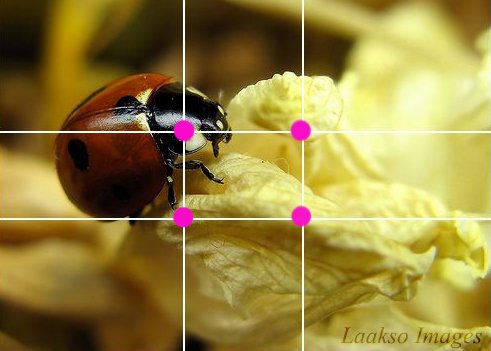
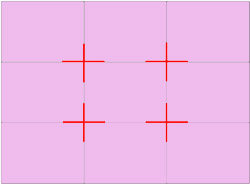
It took me a while before I understood what the rule of thirds is about. It's really very simple. The subject should not be in the center of the photograph. Divide the image by 2 vertical lines and 2 horizontal lines, the important elements of the image should be within the thirds. In the illustration below, the strong points must be in the red crosses.
Take the photo below as an example:
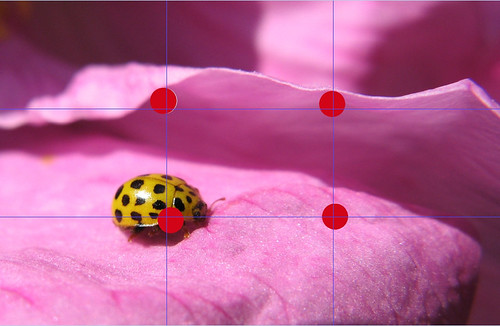
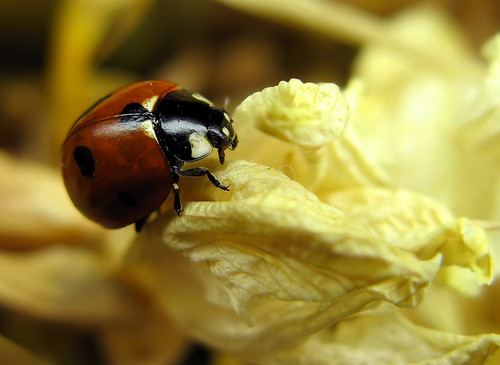
It's just the right spot for the beetle. Because if it was on the next dot, then there would have been useless empty space behind the beetle. It would also look like it was going out of the frame, thus directing the viewer's attention off the image and I don't want that to happen. The title of the photo is Journey, hence I wanted more space on the direction where the beetle was going. To view the image without lines click here.
I believe that I also observed the rule of thirds in this photo:

Bid me farewell
Exposure: 0.017 sec (1/60)
Aperture: f/3.2
Focal Length: 5.8 mm
I don't follow the rule of thirds all the time. In flower macros, for example, when the flower's center look very interesting, expect me to forget about the thirds. The shape and form of the subjects would sometimes dictate whether you should follow the rule of thirds or not. If you want to highlight symmetry, it would be fine if the subject is centered. Here are pieces of evidence showing that sometimes centering works:
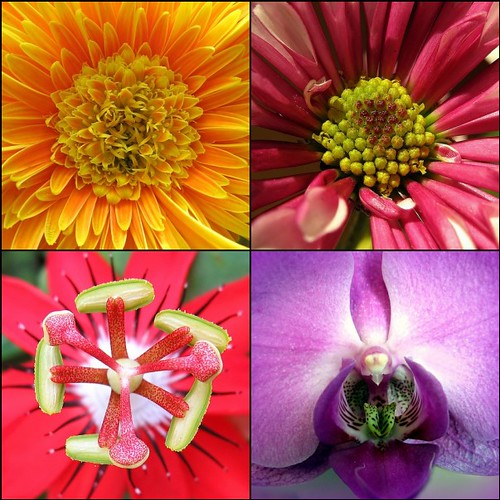
Dare to break some rules once in a while. Don't be afraid of criticisms, bear in mind that you can never please everyone. If you are a newbie, don't feel bad if someone occasionally tells you where you went wrong. Never make your low-pixel camera as the scapegoat for poorly-composed shots, after all, you were the one who made that camera work by pressing the shutter. The photo is either good or bad because of the person behind the camera. Why? Because we have brain cells and our cameras don't. To me the number one rule is to make use of your brain, of course you can break this rule.. at your own risk.