Showing posts with label flowers. Show all posts

Friday, December 16, 2011

Pause

just moping around

“Idleness is sweet, and its consequences are cruel”
~John Quincy Adams


Camera: Canon PowerShot A710 IS
Exposure: 0.002 sec (1/640)
Aperture: f/4.0
Focal Length: 5.8 mm
Exposure Bias: -1 EV
Flash: Off, Did not fire
ISO Speed: 75


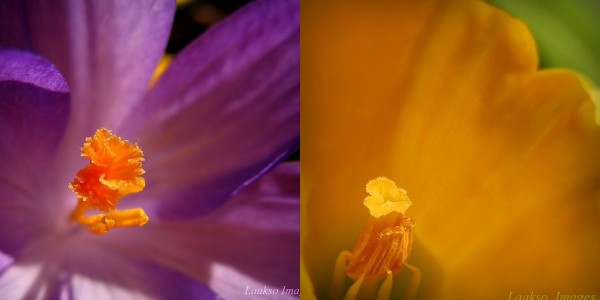
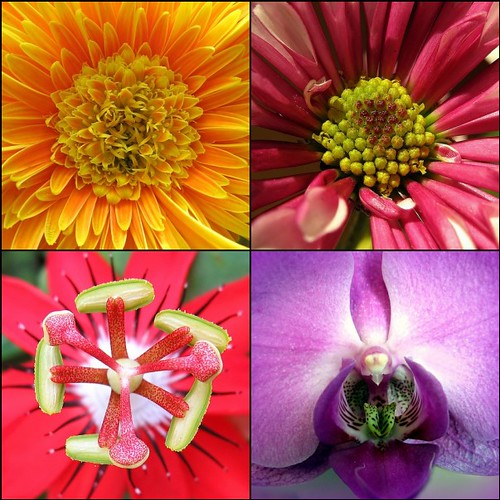
When my camera was new I took hundreds of photos a week, nowadays I barely use it. I do have an acceptable excuse: the dark Finnish winter, but I still remember that 4 years ago, that didn't stop me from experimenting with macro shots. I bought flowers and took pictures of them from different angles:
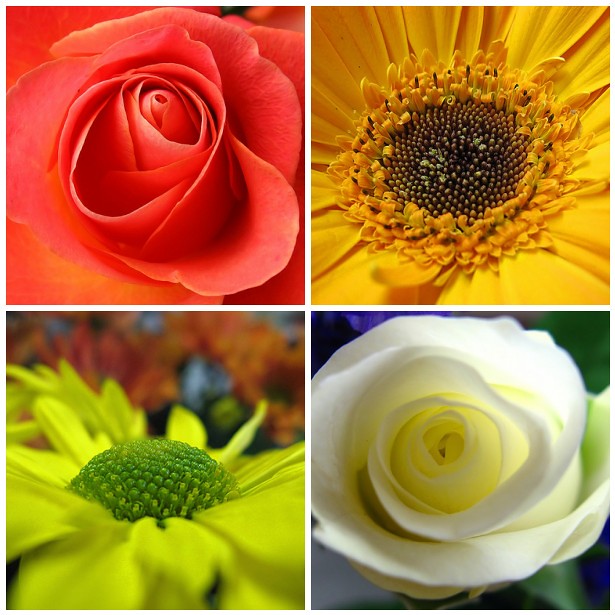
My creation


1. Beautiful & calm, 2. Center of attraction, 3. mum, 4. Better late than never..


During the spring and summer months, I was always outside looking for anything worth taking photos of. By the end of the summer, the amount of photos kept me busy for months. This year, however, was quite different. The last time I used my camera was almost 7 weeks ago when I was in London. I think that somewhere along the line, I lost my enthusiasm. Maybe it's because my camera has seen better days and I am hating myself for being too stubborn to upgrade.

In my attempt to regain enthusiasm, I visit my web gallery every now and then. Sometimes I couldn't believe that I was the same person who took those photos, no kidding! My lucky shots and the comments of photostream visitors inspire me somehow.I know some people who got bored with photography, treated it like something that they had to try once, and then forget about it. Pardon me for making it sound like a one-night stand :-) I don't want to fall in the same category, I prefer a longer, and more fruitful relationship with photography. So while I am on hibernation mode, I will think of moving on to next level. My next steps would be getting a new camera, attending workshops, entering photo contests.. anything that will prepare me for a long-term commitment with photography.

For now, kindly pardon my idleness. I assure you that this just a temporary phase. I'm giving myself some room to grow, hoping that next spring I will fall in love with photography all over again.

Friday, June 5, 2009

Seasons come, seasons go

"Nature gives to every time and season some beauties of its own; and from morning to night, as from the cradle to the grave, it is but a succession of changes so gentle and easy that we can scarcely mark their progress.”
~Charles Dickens

Seasons change
Camera: Canon PowerShot A710 IS
Exposure: 0.003 sec (1/400)
Aperture: f/4.0
Focal Length: 5.8 mm
Date & time: March 8, 2009 at 3.30pm EET
Location: Kerimäki, Finland

Well, what do you know? It seems only yesterday when the sight of the the first spring flowers delighted my senses and now it's already June. Hellooo summer! I don't have nice & bright summer pics yet because it actually feels like mid-autumn here. It's been raining for days and it's quite cold to do anything outdoors. So for now, join me as I reminisce about the sweetness of spring..


I think the cutest spring insect is the
scarlet lily beetle. These critters munch on lilies like crazy, but I can't get rid of them because they are quite photogenic. Their color stands out from the sea of leaves, so spotting these insects should be a piece of cake. Moreover, they don't move much which makes them brilliant subjects.
My creation
1. A Beautiful Pest, 2. I'm back!

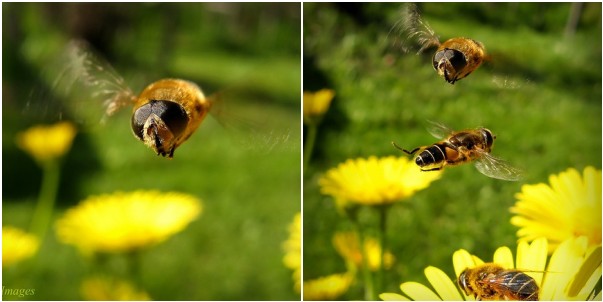
From calm beetles let's move on to some action shots.. Experts always recommend taking photos of bugs either early in the morning or late afternoon because they are not hyperactive during those times. Since I am not a morning person, I've got to choice but to chase insects at mid-day. It's not a wise idea because the shots may be at risk for overexposure. Of course one can always adjust the exposure settings but I do have a tendency to forget that- dementia is catching, you know... A few days before spring bid farewell, I saw hoverflies fluttering over yellow daisies. But then I've got so many photos of insects on yellow flowers and I'm quite bored with them already. For that reason, I concentrated on capturing the hoverflies while in mid-air, luckily most of the shots turned out well. Picking which ones to upload, was as usual, a bit of an agony. Here are 2 of the successful captures:
My creation
1. Soaring over fields of gold, 2. They come in threes..

Blooming beauties
It's a crime not to take photos of flowers on spring time. I experimented more on control of depth of field, the results were quite good. I tried to make the photos more dramatic by keeping them as simple as possible, it worked fine. At least they don't look too mediocre.
My creation
1. Thankful
2. Sunlight

Beginners tend to include some not-so-important elements in their photos. As a result, the composition is all over the place, meaning that the photo fails to tell its 'story'. I was like that too, back when I thought that photography merely involves pressing the shutter. There are pieces of evidence like this pointless shot from years ago that one spring in my life, my photos sucked to the highest degree. I often here nice words from some people who are interested in photography, bless their hearts. They say that my work somehow inspires them, wow I am ever so flattered. If they would see my old shots, I bet they would come to their senses, haha!! The truth is, I am just someone who enjoys taking photos. I try to improve my skills through my own simple ways, hoping that I would always nicely capture the beauty that nature brings, season after season..

Thursday, April 2, 2009

Numbers and rules

“Excellence is in the details. Give attention to the details and excellence will come.”
~ Perry Paxton
pardon my nearsightedness
Pardon my nearsightedness
Camera: Canon PowerShot A710 IS
Exposure: 0.005 sec (1/200)
Aperture: f/4.0
Focal Length: 5.8 mm
Modifications: Adjusted temperature & brightness level
Date & Time : February 7, 2009 at 13.40 Manila Time
Location: Parks & Wild Life, Quezon City, Philippines


Late last year, I had an opportunity to write for an upcoming stock photography site. I had to read about topics that I normally avoid: anything with numbers. The numerical system is like a horrible nightmare, I have spent most of my life eliminating it from my path. Whenever I read about photography, I tend to skip the topics that seem too difficult to understand. However, as I was working on that photography project I had to understand rules of composition where numbers play an important role. It was a good learning experience and I am glad that I had a chance to see numbers and formula in a different light.

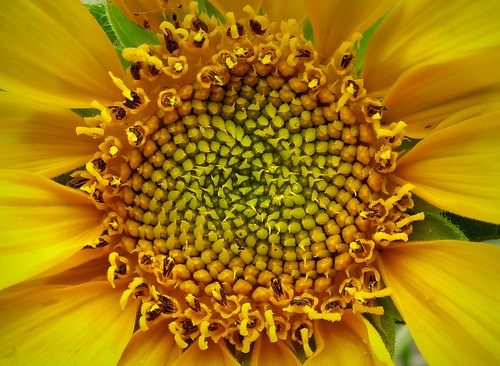
It has been found that the things that we find visually appealing bear the numbers in the Fibonacci series: 0, 1, 1, 2, 3, 5, 8, 13, 21, 34, 55, 89, 144, 233, 377, 610.. The number of petals of most flowers are Fibonacci numbers. Take a closer look at sunflower photo above, it has two sets of spirals, one runs clockwise and the other set runs anticlockwise. The number of spirals are always two consecutive numbers in the Fibonacci series- don't you find that fascinating? There are still many pieces of evidence that link the presence of Fibonacci numbers in nature.


The ratio of each successive pair of numbers in the Fibonacci series is about 1:1.618. What's the significance of that ratio? It is close to
1:1.618034 otherwise known as divine proportion, golden section or golden ratio. Many stunning structures from ancient to modern buildings were built based on the golden ratio. The golden ratio exists in famous art pieces of great artists like Leonardo da Vinci, Michaelangelo and Rembrandt. The use of golden ratio is not exclusive to those big names in the field of art. A regular person like me, for example, can always try to apply it to photographic compositions. After all, if a certain formula can increase the probability to capture viewers' attention, then making use of it shouldn't be a bad idea.

Remember the rule of thirds? It is actually a simplified version of the golden mean. In the rule of thirds, you divide the image into 9 equal parts. But if you want to apply the golden mean to your photos, the image should be divided with 2 vertical and 2 horizontal lines into 9 unequal but symmetrical parts.


Golden ratio: 1:1.618034
a:(b+c),b:a, (a+b): height
d:(e+f),e:d, (d+e):width

pt-golden-section

Placing the highlight of the image along these lines, especially on the intersections or power points would make the photo more appealing.
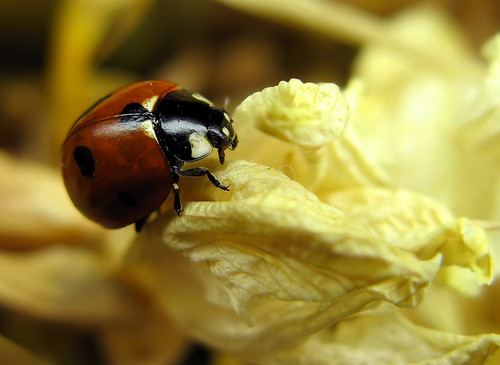
ladybug

hard habit to break

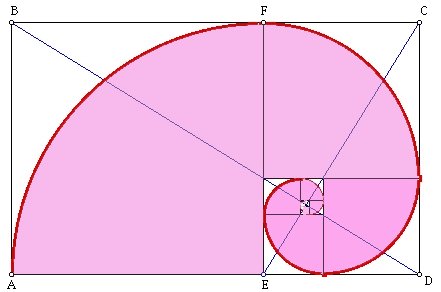
The golden spiral is another application of the divine proportion. This is done by making rectangles of increasing sizes by using the golden ratio 1:1.618.

Rot25

If we will use this on staircase photos and shells like the the pros, may be our shots will look as appealing. The golden spiral can also be used for landscape photos. This shape is found everywhere in nature: the nautilus shell, ram's horns, sunflower heads, fingerprints, DNA and the shape of the Milky Way.

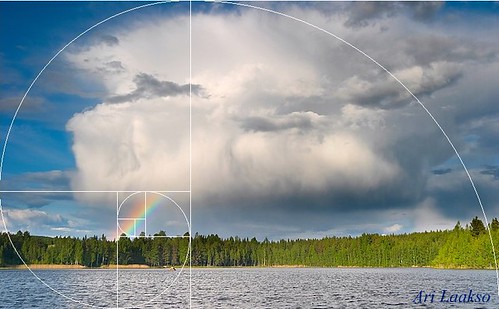
The subject or the interesting part of the image should be in the smallest rectangle. While it should be easy to apply the golden spiral to close up photos, I thought it would also be nice to show you a landscape shot. I don't have a decent one so I had to look for a good sample photo from a web gallery of a pro.

Take a look at the photo below and notice how the rainbow is perfectly positioned in the tiniest rectangle.
spiral3
I find this photo very impressive not just because it was taken by my husband. Would you believe that he didn't even bother thinking about complicated-sounding golden spiral, and yet the highlight of the shot landed on the right spot? How could that be possible? I some people have the innate skill to do everything right. I am not among those fortunate ones, so I guess practice is my only option. I believe that if one would always apply the rules of composition to his or her work, chances are, it will be in their system like an incurable disease.

If you think the golden ratio is too complicated and not fun at all, then by all means, don't bother stressing yourself. Photography shouldn't trigger anxiety. I've got some good news though: you can always make photography simple and fun. Get a camera that has Rule of Thirds grids on the LCD. You can also use this online composition adjuster. All you have to do is load an image from your computer or a URL, and voila, you would get to check if your photos abide by the 'rules'. Just keep on practicing until you get the hang of it, then you're on your road to better photography skills
.

Friday, October 3, 2008

Rules are everywhere

"Photography is still a very new medium and everything must be tried and dare... photography has no rules. It is not a sport. It is the result which counts, no matter how it is achieved"
~Bill Brandt
pollen time
Pollen time
Camera: Canon PowerShot A710 IS
Exposure: 0.017 sec (1/60)
Aperture: f/3.2
Focal Length: 5.8 mm
Modifications: adjusted brightness & contrast levels, cropping, noise reduction

I started taking nature photos in the spring of 2007 using a Canon PowerShot A540. Back then, all I wanted was to have photos of ducks to upload to my Multiply page. Then I found out that the forum I frequent has a thread where members share their digital shots. I posted links to my photos and I am thankful because I got helpful tips from the regular posters of that thread. I realized that there is more to photography than pressing the shutter.

I am more famous in breaking rules than following them. So wasn't really happy when I read about the rules of photographic composition. I researched about the Rule of Thirds which sounded too complicated for me. Any sentence that mentions numbers will always be too difficult for me to understand. I was also a little hesitant to learn, because to me a hobby is supposed to be for fun, if there are rules then it would be a bit stressful. I got bored every time I read about basic stuff about photography until I realized that if I will not change my attitude towards learning new things, then I will never improve. My photos would probably be worse than photos taken by a 6-year-old. So I started to listen to criticism and I also followed my husband's advise and that was to think before pressing the shutter.

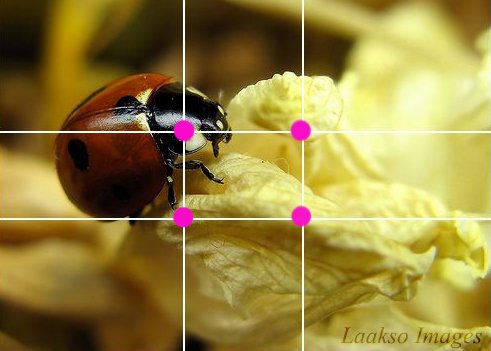
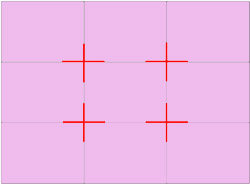
It took me a while before I understood what the rule of thirds is about. It's really very simple. The subject should not be in the center of the photograph. Divide the image by 2 vertical lines and 2 horizontal lines, the important elements of the image should be within the thirds. In the illustration below, the strong points must be in the red crosses.
rot2

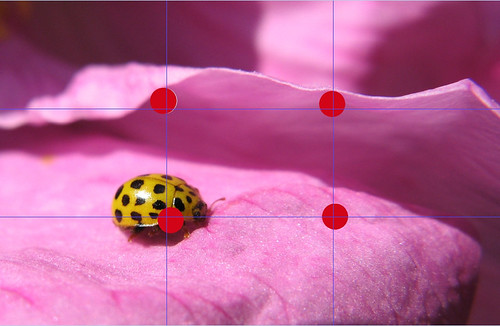
Take the photo below as an example:
ROT

It's just the right spot for the beetle. Because if it was on the next dot, then there would have been useless empty space behind the beetle. It would also look like it was going out of the frame, thus directing the viewer's attention off the image and I don't want that to happen. The title of the photo is Journey, hence I wanted more space on the direction where the beetle was going. To view the image without lines click here.

I believe that I also observed the rule of thirds in this photo:
Bid me farewell~  Imagoism
Bid me farewell
Exposure: 0.017 sec (1/60)
Aperture: f/3.2
Focal Length: 5.8 mm

I don't follow the rule of thirds all the time. In flower macros, for example, when the flower's center look very interesting, expect me to forget about the thirds. The shape and form of the subjects would sometimes dictate whether you should follow the rule of thirds or not. If you want to highlight symmetry, it would be fine if the subject is centered. Here are pieces of evidence showing that sometimes centering works:
My creation

Dare to break some rules once in a while. Don't be afraid of criticisms, bear in mind that you can never please everyone. If you are a newbie, don't feel bad if someone occasionally tells you where you went wrong. Never make your low-pixel camera as the scapegoat for poorly-composed shots, after all, you were the one who made that camera work by pressing the shutter. The photo is either good or bad because of the person behind the camera. Why? Because we have brain cells and our cameras don't. To me the number one rule is to
make use of your brain, of course you can break this rule.. at your own risk.

Thursday, September 25, 2008

Bug stalking 101

“The policy of being too cautious is the greatest risk of all.”
~ Jawaharlal Nehru

stalked
Stalked!
Camera: Canon Powershot A710IS
Location:Punkaharju, Finland
Date & time: 5.36pm EEST
Exposure: 0.017 sec
Aperture: f/2.8
Focal length: 5.8mm
Modifications: cropping, adjusted brightness & contrast levels

I am keen on learning more about insect photography. I always read tips from some forums and blogs of professional photographers. Sometimes reading about some so-called tips make me wince. I was shocked to find out that some photographers resort to freezing bugs so that they could get 'better' photos of them. I think that is very wrong to sacrifice a bug's precious life for the sake of art. Talk about some human's selfish needs. No wonder so many species are now extinct. In my opinion such form short cutting defeats the real purpose of nature photography. There's nothing like capturing nature's priceless moments.

In case you find nature macrophotography very interesting, then by all means give it a shot. It's not exclusive to people with high-end cameras, if it was then I would not have the thousands of bugs and flower close-ups that are in my hard disk right now. I already have an entry about flower macros. For now I want to share with you how to find and stalk bugs in their natural environment.

One thing that you should do as you walk close to the subject is to adjust your camera settings. Lower the exposure if the light is too harsh. Do you think you need to change the white balance? Do all the necessary adjustments prior to getting up close to the bug.

Spiders
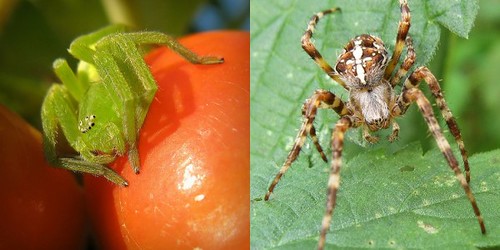
It's quite easy to find spiders. If not in their web, they are usually on leaves or crawling on the ground. These 8-legged creatures are not insects. They don't have wings, but once they sense your presence they will disappear in flash. Why? Because most of them have 8 eyes that's why they can easily detect human presence. Getting good photos of them is a bit difficult, but not impossible. Just don't do anything that will startle them, move very slow but press that shutter like a maniac. If you are very close, make sure that your camera won't accidentally hit the leaf or whatever the spider is on because it's going to blow your chance to take more photos. In a blink of an eye spidey will be somewhere else. Here are two spiders who didn't mind me taking photos of them:
My creation
1. Greenie
2. Spider on a stinging nettle

Bumble bees
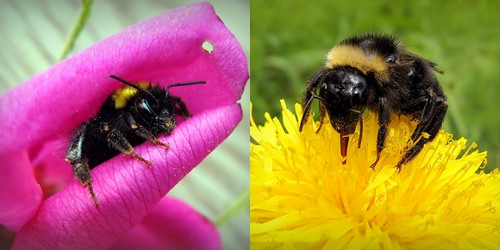
These ever buzzing winged insects are very restless especially if they are surrounded by plenty of tiny flowers. A bumble bee will just stay on a flower for a few seconds. They are normally too busy to get intimidated by the camera, but you have to press on the shutter as fast as you can. I haven't had the luxury of time to use manual focus on bumble bees. My camera is always on full auto mode whenever I take photos of them. My best shots bumble bees:
My creation
1. Coming out of the shell
2. Another day in the office

Honey bees
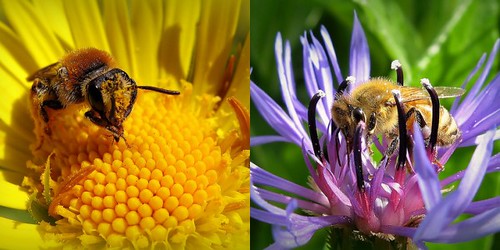
If bumble bees are always in a hurry to get things done, honey bees are different. They are quite methodical. Hence, easier to photograph. You can follow it's movement from one flower to another and you can take many shots of it because it stays on a spot for a minute or more.
My creation
1. And yet another hard worker
2. Behind bars

Hover flies
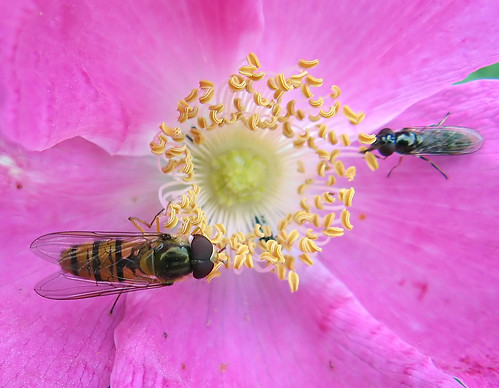
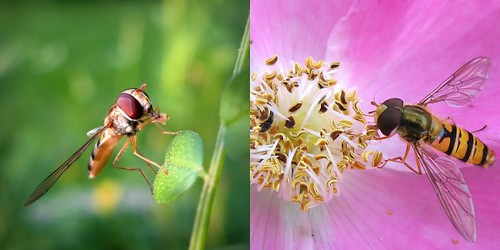
I have plenty of hover fly photos in my gallery. Based on my experience, they are the easiest winged creatures to take photos of. You can find them on flowers and sometimes they rest on leaves or blades of grass. You can be just inches away from them but they would not care, except if you will shake the leaf or flower. Once you are used to taking photos of bumble bees & honey bees, then you can effortlessly photograph hover flies. You an experiment on many different angles. Hover flies are twice smaller than bumble bees, to capture more of its detail you have to be really close to them.
My creation
1. A praying hoverfly?
2. in the middle of something

Butterflies
These lovely creatures are probably everyone's favorite insect. Photographing them is quite challenging. Once you see one on a flower, approach it slowly. Your mere shadow will ruin your chance to take photos of these winged insects. So try your best not to cast your shadow over it. If you startled accidentally, it will fly away. But don't fret, because it will come back to the same spot where you saw it. I've seen it happen several times. Like when I took these photos:
My creation
1. A summer remembrance
2. Monday blues

The first time I saw a huge moth was when I was 5 years old. It was orange with beautiful patterns on its wings. The wing span of that moth as about 18-20 centimeters. It was my mom who saw it first. Until now I remember how that moth looked like. Sadly, it was the first and last time that I saw such a beautiful live moth. I saw something that looked almost like it but it was in a butterfly museum in Asia, pinned on a wall. I probably would never see anything like that in this lifetime. So while some species are still alive, let's not waste the opportunity. Photograph them while you can. A few decades from today they may no longer be around, but if you took the risk of getting up close to those critters then you will have beautiful pictures to show to your grandchildren someday.