Showing posts with label nature. Show all posts

Tuesday, January 26, 2010

Images of Winter

“In the depths of winter I finally learned there was in me an invincible summer”
~ Albert Camus


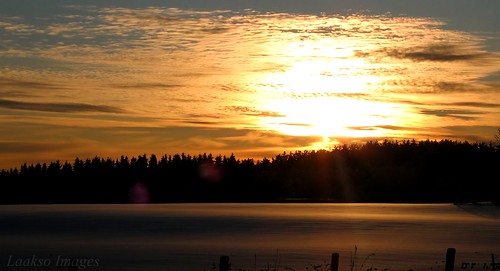
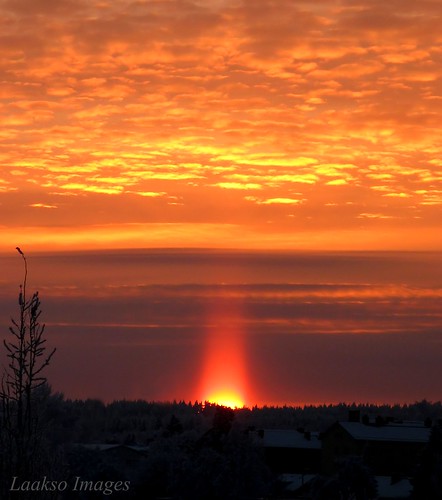
fire in the horizon
Fire in the horizon
Camera: Canon PowerShot A710 IS
Exposure: 0.003 sec (1/320)
Aperture: f/4.5
Focal Length: 30.8 mm
Exposure Bias: 0 EV
ISO Speed: 5
Modifications: Cropping, adjusted contrast, noise reduction
Date taken: 25 January 2010 at 4.40pm EET
Location: Savonlinna, Finland

I am one of the creatures who head south during winter time. This year, however, is an exception. I was in the Philippines from the second week of November and I flew back north on the 29th of December. I would never leave the lovely tropics at that time of the year, if it wasn't for residence permit renewal. But well.. here I am now, wishing that the temperature would at least be just around -5 degrees Celsius or zero so that I wouldn't have to wear too many layers of clothes.

I miss taking photos of flowers and bugs, but what can I do? It's still a long wait to spring. Days without taking photos can be quite dull. Photography keeps me sane, and that's the reason why I occasionally brave the extremely cold weather. Moreover, I know that some people would be delighted to see images of winter, and they also inspire me to keep on shooting.

Taking photos of trees, sky and sunset is a piece of cake, in contrast to shooting bugs from a few centimeters. Again it was just a matter of waiting for the right kind of natural light. Cloudy weather would make the snow look grey, and the scenery would look quite depressing. It's the clear blue sky that motivates me to take photos. The soft light at sunrise should be lovely, but I rarely wake up that early, hence sunrise shots are totally out of the question. Thank goodness there's always the winter sunset, which is a splendid sight to behold.

I don't have a lot of creative ideas for winter images. I am quite sure that no matter how glorious the sunset is, and how awesome the snow-covered trees are, viewers would soon get bored looking at hundreds of sunset photos taken from the same location. During the summer months, I am confined to our garden and backyard, but nowadays, I really need to get on my feet. It's a good way to shed off some extra pounds though.

Trying new things is not my cup of tea and it's one of the reasons why I've limited my so-called abilities to macro photography. I'm glad that I'm slowly getting the hang of expanding my horizon, as far as photography is concerned. Waiting for spring and summer can be a drag, good thing that I'm finding ways to make the most of the present season. The white color predominates winter, but that is not a reason to ignore the other colors that brighten up the scene.

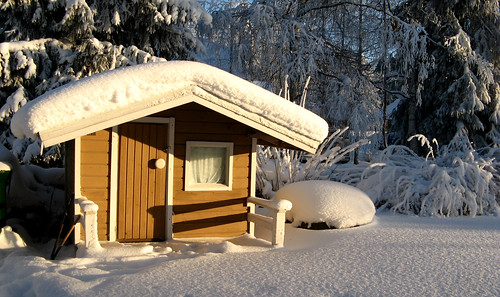
Here are some pieces of evidence to prove that winter is not always ugly:

mosaic9b6a33b541a88b0f6a5f11b3c6d8b28d455f9794
winter sunset

Frozen playhouse

Saturday, October 31, 2009

Butterfly-inspired

May the wings of the butterfly kiss the sun
And find your shoulder to light on,
To bring you luck, happiness and riches
Today, tomorrow and beyond.
~Irish blessing

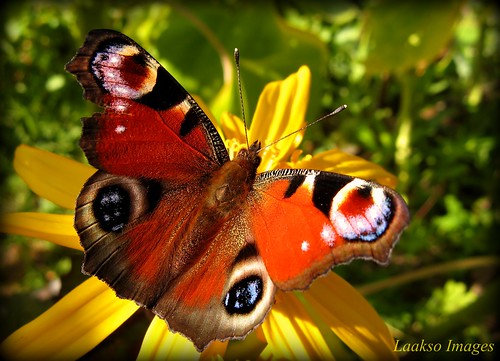
A thing of beauty
Photo title: A thing of beauty
Camera: Canon PowerShot A710 IS
Exposure: 0.005 sec (1/200)
Aperture: f/4.0
Focal Length: 5.8 mm
Exposure Bias: 0 EV
Flash: Off, Did not fire
Location: Kerimäki, Finland
Date & time: 25.8.09 17:09:28

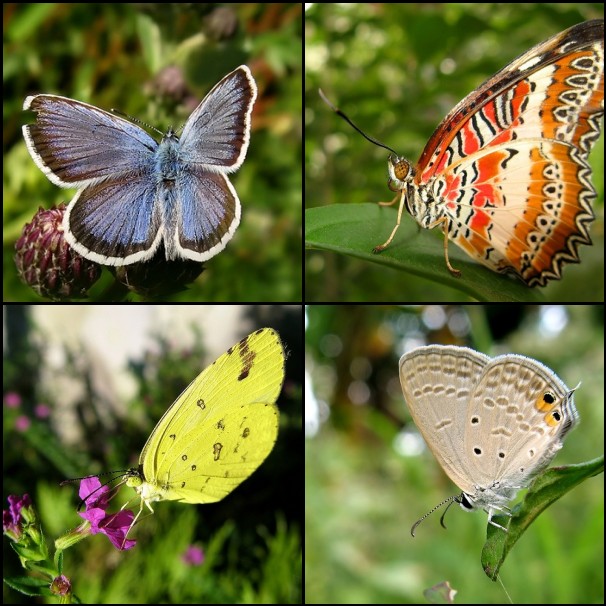
I was browsing my favorite science news site for some serious stuff, when something colorful caught my eye. I usually visit that site to look for medical and health updates, but today, a close-up shot of a butterfly's wings made me forget what I came there for. Because of that photo, I found out that I'm not the only one who is fascinated with the patterns and colors of butterflies' wings.

Last year, Marco Giraldo of University of Groningen, Netherlands, discovered that the appearance of the butterfly wings is influenced by both color pigments and the tiny scales that make up the wing. Butterflies' wings are made up of two layers of overlapping scales that efficiently reflect light. This discovery inspired scientists to replicate biological structures of butterfly wings to make optically active structures such as optical diffusers for solar cells. Simply put, solar panel technology may improve because the charisma of butterflies tickled the curiosity of scientists. Sweet! That's an undeniable proof that little creatures must never be ignored. They are more than critters, they are pretty creatures that help improve human lives in their own tiny, yet powerful ways.

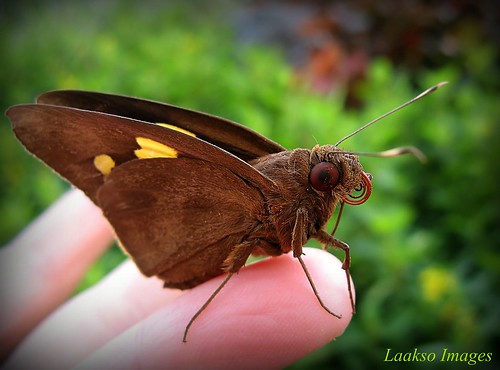
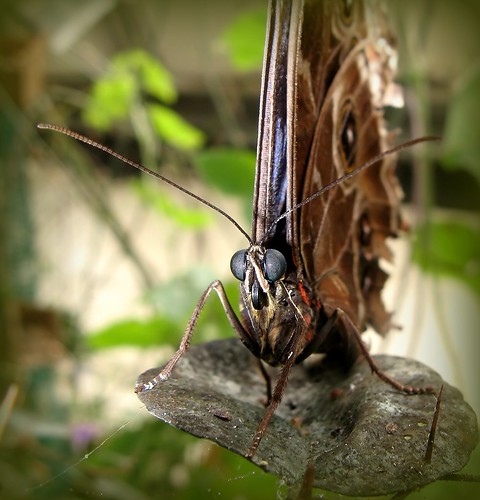
It's quite a pity that some people are scared or even disgusted of butterflies. Moths and butterflies don't bite, I wonder why people are scared of them. There was a time I saw a middle-aged man trying to kick something out of its way. I thought it was a cockroach, but to my surprise, it was a huge moth. I picked the moth from floor to save it from heartless humans:
Isn't she lovely?

Who would be scared of something so fragile? That just doesn't make any sense. I travel halfway across the globe just to visit butterfly gardens, and there I hear teenage girls scream when butterflies land on their shoulders. If it was a cockroach sanctuary, I would have understood their disgust. Oh well, there are just too many things in this world that make blood pressure rise. The world needs more scientists who can help humans appreciate nature more... or perhaps more of my butterfly photos :-)

My creation

References:
FECYT - Spanish Foundation for Science and Technology (2009, October 9). Nanometric Butterfly Wings Created.
American Chemical Society (2009, February 5). Natural Solar Collectors On Butterfly Wings Inspire More Powerful Solar Cells. ScienceDaily.
University of Groningen (2008, January 22). Pigmentation In Some Butterfly Wings Created By Nanostructures. ScienceDaily. Retrieved

Tuesday, September 30, 2008

Straight in the eye

“Never bend your head. Always hold it high. Look the world straight in the eye.”
~ Helen Keller

straight in the eye
Straight in the eye
Camera: Canon PowerShot A710 IS
Date & Time: July 27, 2008 at 11.23am EEST
Location: Joensuu, Finland
Exposure: 0.017 sec (1/60)
Aperture: f/3.5
Focal Length: 5.8 mm
Modifications: cropping, adjusted brightness, contrast & color levels, noise reduction

Among the rules of animal and people photography is to focus on the eyes. It's a rule that I never questioned. I don't know about you, but I would definitely hate it if someone would take a photo of me and the camera is focused on the strands of gray hair on the crown of my head. Other than the fact that it would expose the ugly side of me, I am quite sure that no one would find it interesting.

According to Frank H. Philips: "On many bugs the eyes (and even bug “pupils”) lend a dramatic connection between them".. Hence photos focused on the bugs' eyes look very interesting. Since the day I read Frank Philips' tip, I have always aimed for the insects' or spiders' eyes. It is not easy, but eventually, you will get the hang of it. You just have to keep on practicing.

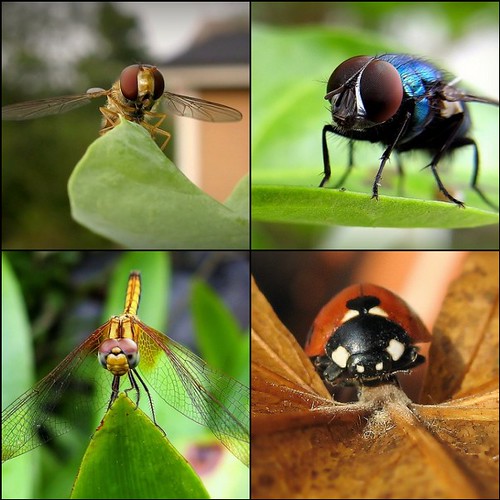
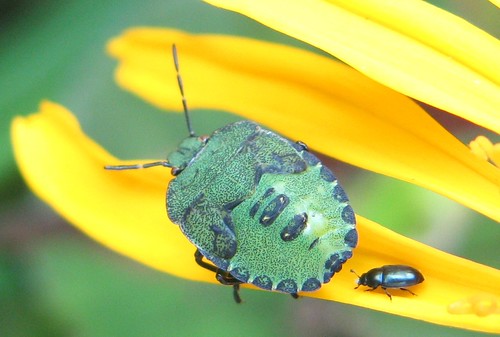
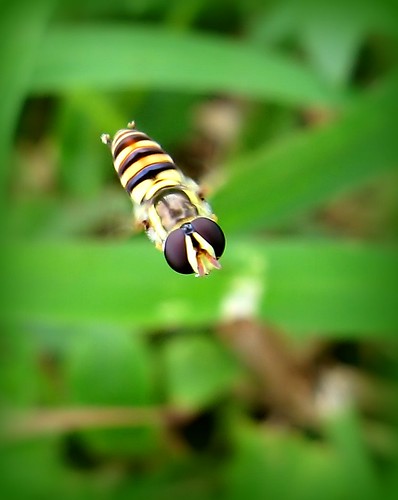
The major challenge in insect macrophotography is of course the size of the insects. To avoid immediate disappointment, look for bigger insects to practice on. Rhinoceros Beetles have big eyes and they are rather calm which means that you can take a hundred of photos of it if you want to. But those huge beetles are quite rare. Lady bugs and shield bugs are tiny but quite easy to photograph. Once you have spotted those critters, take as many photos as you can from different angles. Head-on perspective is my favorite. It is very challenging but I find it really cool, a hundred times more intersecting than a boring aerial view like this pic. Insects are beautiful and when photographed the right way, I think a lot of people would appreciate them more. I am quite pleased with the comments I got when I uploaded these pics:
My creation
1. in your face!
2. Fly
3. I dare you to move
4. face to face

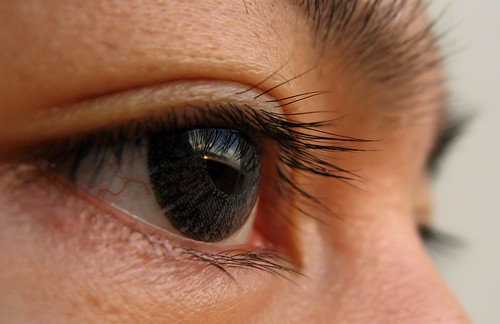
To be fair with the bugs, I took a photo of my eye:
Vision of a sunset..
Vision of a sunset
Camera: Canon PowerShot A710 IS
Exposure: 0.017 sec (1/60)
Aperture: f/2.8
Focal Length: 5.8 mm
To view the large size click here

If you have the right equipment for macrophography then good for you. Your photos shouldn't suck, if they do, hmm shame on your gears :-) But if you are a P&S user like me, never ever focus on the limitations of your camera. The key is to get very close to the subject. Concentrate your efforts on following the basic principles of photography and you will never go wrong.

Thursday, September 25, 2008

Bug stalking 101

“The policy of being too cautious is the greatest risk of all.”
~ Jawaharlal Nehru

stalked
Stalked!
Camera: Canon Powershot A710IS
Location:Punkaharju, Finland
Date & time: 5.36pm EEST
Exposure: 0.017 sec
Aperture: f/2.8
Focal length: 5.8mm
Modifications: cropping, adjusted brightness & contrast levels

I am keen on learning more about insect photography. I always read tips from some forums and blogs of professional photographers. Sometimes reading about some so-called tips make me wince. I was shocked to find out that some photographers resort to freezing bugs so that they could get 'better' photos of them. I think that is very wrong to sacrifice a bug's precious life for the sake of art. Talk about some human's selfish needs. No wonder so many species are now extinct. In my opinion such form short cutting defeats the real purpose of nature photography. There's nothing like capturing nature's priceless moments.

In case you find nature macrophotography very interesting, then by all means give it a shot. It's not exclusive to people with high-end cameras, if it was then I would not have the thousands of bugs and flower close-ups that are in my hard disk right now. I already have an entry about flower macros. For now I want to share with you how to find and stalk bugs in their natural environment.

One thing that you should do as you walk close to the subject is to adjust your camera settings. Lower the exposure if the light is too harsh. Do you think you need to change the white balance? Do all the necessary adjustments prior to getting up close to the bug.

Spiders
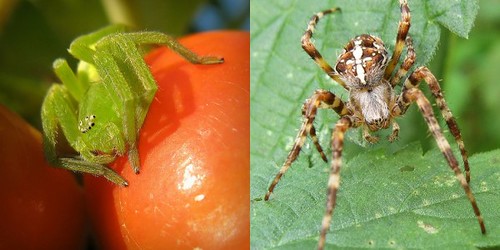
It's quite easy to find spiders. If not in their web, they are usually on leaves or crawling on the ground. These 8-legged creatures are not insects. They don't have wings, but once they sense your presence they will disappear in flash. Why? Because most of them have 8 eyes that's why they can easily detect human presence. Getting good photos of them is a bit difficult, but not impossible. Just don't do anything that will startle them, move very slow but press that shutter like a maniac. If you are very close, make sure that your camera won't accidentally hit the leaf or whatever the spider is on because it's going to blow your chance to take more photos. In a blink of an eye spidey will be somewhere else. Here are two spiders who didn't mind me taking photos of them:
My creation
1. Greenie
2. Spider on a stinging nettle

Bumble bees
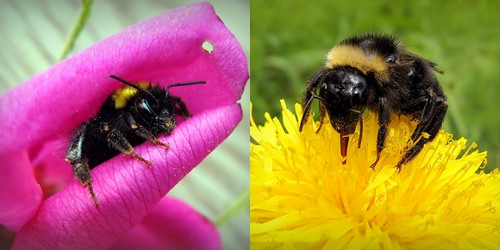
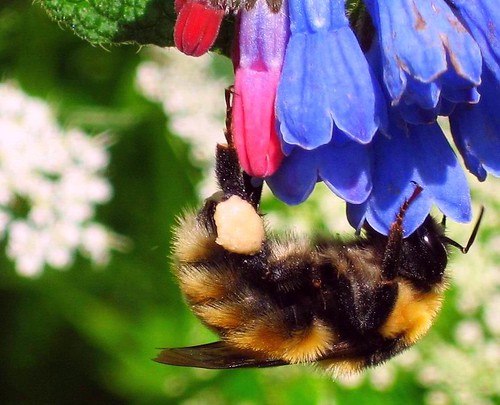
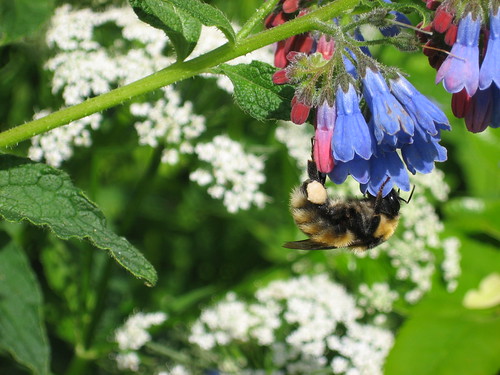
These ever buzzing winged insects are very restless especially if they are surrounded by plenty of tiny flowers. A bumble bee will just stay on a flower for a few seconds. They are normally too busy to get intimidated by the camera, but you have to press on the shutter as fast as you can. I haven't had the luxury of time to use manual focus on bumble bees. My camera is always on full auto mode whenever I take photos of them. My best shots bumble bees:
My creation
1. Coming out of the shell
2. Another day in the office

Honey bees
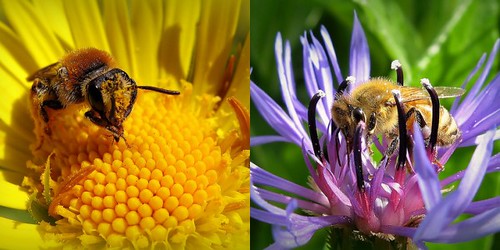
If bumble bees are always in a hurry to get things done, honey bees are different. They are quite methodical. Hence, easier to photograph. You can follow it's movement from one flower to another and you can take many shots of it because it stays on a spot for a minute or more.
My creation
1. And yet another hard worker
2. Behind bars

Hover flies
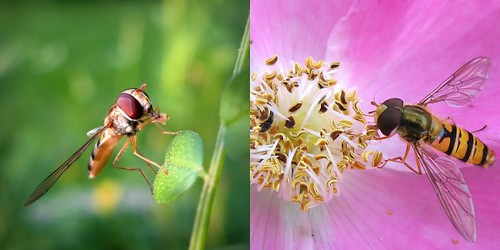
I have plenty of hover fly photos in my gallery. Based on my experience, they are the easiest winged creatures to take photos of. You can find them on flowers and sometimes they rest on leaves or blades of grass. You can be just inches away from them but they would not care, except if you will shake the leaf or flower. Once you are used to taking photos of bumble bees & honey bees, then you can effortlessly photograph hover flies. You an experiment on many different angles. Hover flies are twice smaller than bumble bees, to capture more of its detail you have to be really close to them.
My creation
1. A praying hoverfly?
2. in the middle of something

Butterflies
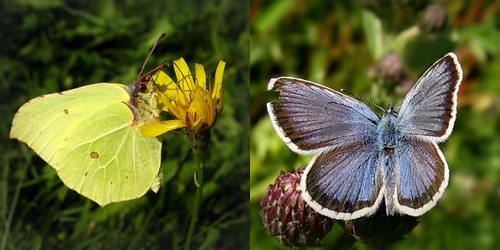
These lovely creatures are probably everyone's favorite insect. Photographing them is quite challenging. Once you see one on a flower, approach it slowly. Your mere shadow will ruin your chance to take photos of these winged insects. So try your best not to cast your shadow over it. If you startled accidentally, it will fly away. But don't fret, because it will come back to the same spot where you saw it. I've seen it happen several times. Like when I took these photos:
My creation
1. A summer remembrance
2. Monday blues

The first time I saw a huge moth was when I was 5 years old. It was orange with beautiful patterns on its wings. The wing span of that moth as about 18-20 centimeters. It was my mom who saw it first. Until now I remember how that moth looked like. Sadly, it was the first and last time that I saw such a beautiful live moth. I saw something that looked almost like it but it was in a butterfly museum in Asia, pinned on a wall. I probably would never see anything like that in this lifetime. So while some species are still alive, let's not waste the opportunity. Photograph them while you can. A few decades from today they may no longer be around, but if you took the risk of getting up close to those critters then you will have beautiful pictures to show to your grandchildren someday.

Saturday, September 20, 2008

Weather talk

I often say that I rarely take photos when the weather is ugly. It's because I want to avoid the hassle of making the images look good through post-processing. I am not against photo editing, the truth is I suck at post-processing. There are hobbyists that are well-versed in that area, like my friend Romy who can make a drab pebble shimmer like a piece of jewelery. Since my skill in Photoshop is not that good yet, I just rely on good weather condition. Great light will always produce good images. The image below is SOOC- straight out of the camera:
Untouched beauty
Untouched beauty
Exposure: 0.002 sec (1/640)
Aperture: f/4
Focal Length: 5.8 mm

The weather is seldom perfect. But if you want your photos to convey a sad mood then rainy days can be your friend because raindrops symbolize tears and conditions that call for anti depressants.

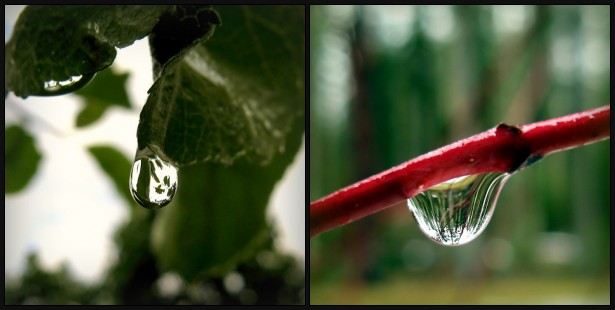
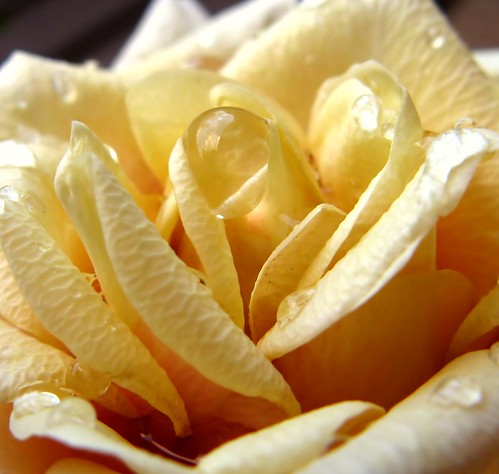
Taking photos of droplets is a lot easier than stalking bugs, at least you can get very close to the droplet without fear because it won't sting you. I saw a lot of photos of reflections on water drops last year and I thought that it was impossible for my little camera to produce such images. Well, I was wrong. One of the tricks is to focus on the reflection itself. It's also best to use manual focus, but if you think that the water drop will fall in any second then use full auto mode. I guess tripod would be very helpful but I haven't used one yet. Take a look at my water drop photos:
My creation
1.Shedding tears
2.Look Deep into nature

Water drops give dramatic effect to flowers. In case you don't feel like going out to take photos, then use a medicine dropper to put a few drops of water on petals. Make the drops as big as possible so that it be easier to focus on.

Between two loves

I only have a few droplet photos in my gallery. Now that it rains almost everyday,and the bugs are slowly disappearing, I think I will concentrate on droplet reflections. One of Chris Marquardt's photography tips is to Learn to love overcast days. Maybe I should.

Monday, September 8, 2008

Insect Porn

“All nature's creatures join to express nature's purpose. Somewhere in their mounting and mating, rutting and butting is the very secret of nature itself.”
~ Graham Swift

~Make love, not war~ Happy Bug Wednesday!
Make love, not war
Location: Pähkinärinne, Vantaa. Southern Finland
Date & Time: June 28, 2008 4.09PM EET
Camera: Canon PowerShot A710IS
Exposure: 0.008 sec
Aperture: f/4
Focal length: 5.8mm

Among the advantages of a compact camera is that its size and weight won't interfere that much with your daily routine. Take the photo above as an example. I took that on the way home from the grocery and I had two shopping bags at the time. I can't imagine taking photos of bugs by the road side with a heavy DSLR while carrying bags of groceries I am not strong enough to do that.

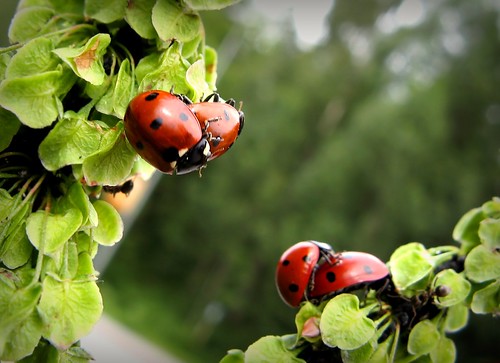
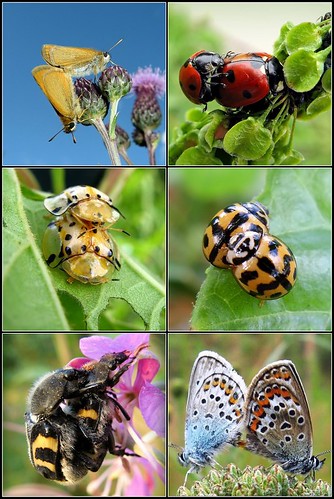
It's so easy to take photos of insects while they are mating. You can take 100 photos of them is you are quick enough. But that will leave you with so much work afterwards. If you want to upload the photos later to your online gallery, it's a must to pick the best ones, otherwise the photo viewers may get bored to death except of course if they are entomologists who would like to carefully document the bugs' mating process. Once you see a mating pair, don't be afraid to get very close to them. Trust me, they would rarely mind your presence unless startle them by moving the leaves or petals where they are. But when do they mate? The earliest time of the day when I saw mating butterflies was at 11 AM. I once took photos of beetles mating at 7 PM, the evening light was nice then. Of course if there is a butterfly park near you, there would always be mating couples there. But if you are like me who don't have much choice but to look for them in the wild, you have to be alert. Once you see two of the same kind of butterfly, there's a big chance that they are in the middle of a courting ritual. Try not to disturb them and just walk closer to their direction when they get down to the actual business. Beetles are easier to capture because they don't move much. In addition to that, they mate for hours. You will have a lot of time to take photos them. When I was on vacation in the Philippines, I saw mating tortoise beetles while I was on my way to a nearby mall. I took photos of that couple and then after my 2-hour mall trip, they were still at it. Get the picture?


Presenting.. my porn collection:
My creation
1. Caught in the act, 2. Size doesn't matter?, 3. Afternoon delight, 4. bugs in love, 5. mating beetles, 6. mating butterflies

If you find those photos funny & interesting, why not give insect porn a try? Forget about giving those bugs some privacy, they do it by the road side for crying out loud. Just look for them and keep in mind that sex sells.


Wednesday, September 3, 2008

Lucky shots

Luck is what happens when preparation meets opportunity” ~Seneca


hoverfly in flight
Hover fly in flight

Location: Filinvest Alabang, Muntinlupa Philippines
Date: January 1, 2008, 3:23 PM Manila time
Camera: Canon PowerShot A710 IS
Exposure: 0.017 sec
Aperture: 3.5
Modifications: Cropping, adjusted brightness, noise reduction


If you have visited my Flickr photostream, you may have noticed that usually my reply to comments is: "it's just a lucky shot" especially when it is about photos of insects in flight. I even referred to the photo above as 'my ultimate lucky shot', why? Because it really was. I took that photo while I was in the Philippines. It was the first day of the year and I was my nephew's baby sitter for the day. We were walking along Filinvest Avenue in Muntinlupa. Of course I was prepared to take photos. I hoped to find lady bugs, but I didn't find any. Then I noticed a bug in stationary flight! Oh joy, oh rapture! If I may borrow that line from Helga G. Pataki. I normally take more than 10 shots of my subjects but that time, I didn't have the chance to press the shutter more twice. Thanks to little Clarence John for scaring the bug with his hand. When I asked him why he scared it away, his response was: "it may bite me". A piece of advise: if you want to capture insects in flight, don't bring a kid along, it's for your own good. Fortunately one of the photos turned out okay and it's my most interesting photo to date.


Okay so I did it once, big deal, but can I manage a shot like that again? The geek in me analyzed the probability.
Based on my experience, taking photos of bugs in the Philippines wasn't exactly a walk in the park. I think the warm climate is the culprit, it makes bugs hyperactive. The temperature during summer months here in Finland will never match the summers in the tropics. That means that insects here can't be as restless. In a addition to that, my nephew doesn't live here, so I though maybe I can capture bugs in flight again. It shouldn't be impossible. And besides taking photos of insects on flowers or leaves has become too easy for me. I wanted to challenge myself that's why not so long ago, I set a goal to capture bugs in flight, while they are around. I found out that it is not time-consuming because you will only have a few seconds to press the shutter. I considered that as a good thing because at least I was able to attend to other things in the backyard like weeding & watering the plants.

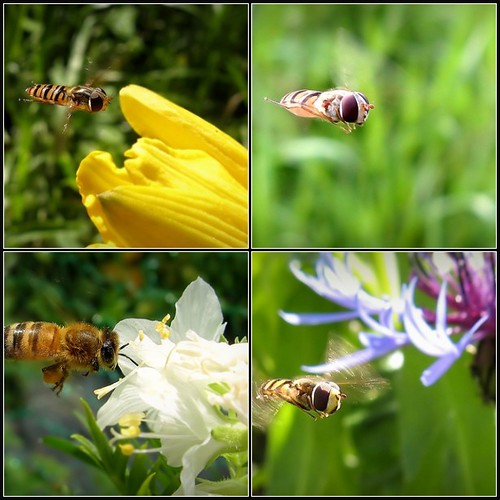
Here are some of my bugs in flight photos:
My creation
1. Ready or not, here I come!, 2. captured in flight, 3. Almost there, 4. Off to the next destination

"How did you do that?", some viewers asked. Well, I was prepared to capture those critters and grabbed the opportunity to fire a few shots at them while they were in midair. Based on Seneca's quote, I can consider it as luck. So if you want to take photos of flying insects, remember that you need patience, camera and luck :-)

Sunday, August 31, 2008

Spring Memories

“If we had no winter, the spring would not be so pleasant: if we did not sometimes taste of adversity, prosperity would not be so welcome.
~Anne Bradstreet

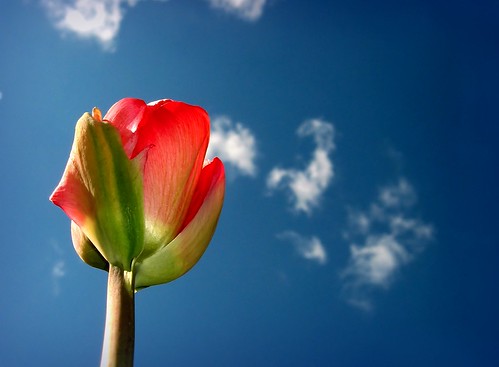
A smoking tulip
A smoking tulip
Location: Anttola, Eastern Finland
Date: May 23, 2008
Camera: Canon PowerShot A710IS
Exposure: 0.002 seconds
Aperture: 5.6
Focal length: 5.8mm
Modifications: cropping, adjusted brightness & contrast levels

Autumn is here whether I like it or not. So I've got no choice but to divert my attention to beautiful things before this season makes me clinically insane. Now kindly join me as I reminisce about lovely days of spring.

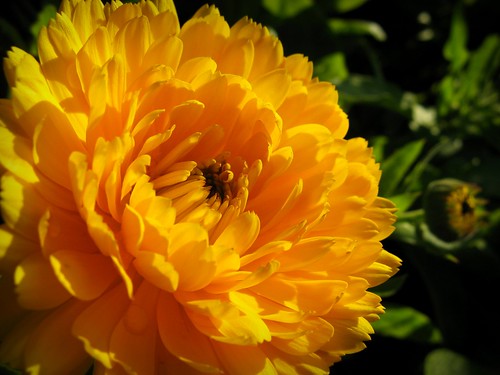
Spring means colorful flowers are back to life. My favorite spring flowers are hepaticas and tulips. I took several photos of them 3 months ago. To make my photos less boring, I experimented with different angles. I found out that shots that are focused on the tulip's inner parts are not that appealing. Whenever I take photos of chrysanthemums I do my best to focus on the flower's center but that didn't work well with tulips. Since the top view wasn't great, I took photos from the bottom, logical isn't it? I took the "smoking tulip" photo by holding the camera inches below the flower's receptacle and hoped that the focus would be on the petals. It was a trial-and-error process, but seeing how the tulip's color stand out against the blue sky was a delight. That perspective also gave the illusion that the tulip was so close to the clouds making it look like a colorful chimney. If you want to try this unusual POV, it's necessary to use flash otherwise the petals would look too dark because of the shadow from the flower itself.

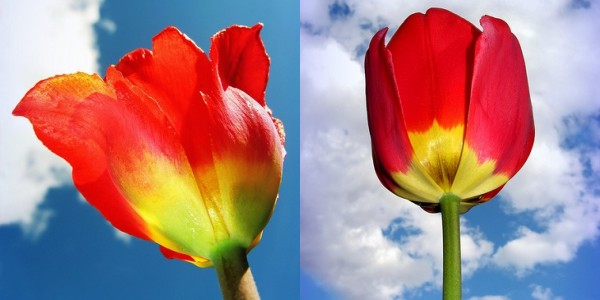
More spring beauties:
My creation
1. Kiss the cloud goodbye, 2. You've reached a better place ...

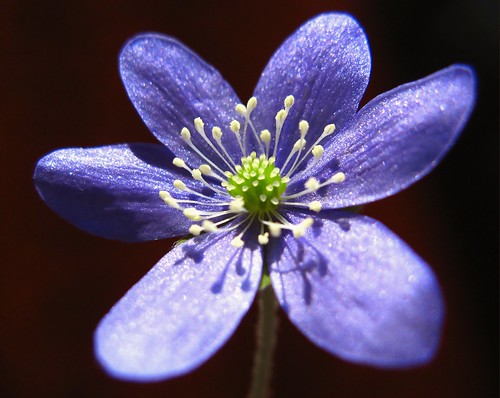
Hepatica
Thankful
Location: Vantaa, Finland
Date: April 20,2008, 6:22PM
Exposure: 0.017
Aperture: f/2.8
Focal length: 5.8mm

I picked this dainty flower in the woods and brought it to our balcony for photos. The evening light was just right for taking photos at the time. The flower's lime green part looks like a candy, it's interesting, hence I did my best to focus on that. Some said that the petals didn't look nice and that aperture wasn't right for the photo. Okay, fine.. so there are imperfections in the image, no big deal. What matters is that I know that my effort was perfect. I also had fun shooting and the most important thing is I have images that will brighten up my mood..helping me keep my sanity.

Wednesday, August 27, 2008

Small beginnings

"From small beginnings come great things"
~
Proverb

My first sharp bumble bee photo
Location: Savonlinna, Finland
Date & time: 2007:06:28 14:22:31
Camera: Canon Powershot A540
Aperture: f/5.5
Focal length: 23. 2 mm
Exposure: 0.002 sec
Modifications: cropping, adjusted brightness & contrast, color levels

If you want to see the unprocessed image click here. I cropped it the wrong way, my bad. What was I thinking? The head of the bee almost didn't make it to the frame. There should have been more space in that direction. I also wasn't close enough to the subject. The DOF is okay though, and that pollen on its leg adds interest to the image. I only noticed that when the image was already in my laptop. I was quite amazed and the rest, as they say, is history.